

In the field of precision parts manufacturing, "less cutting and near-net forming" has become the core direction for cost reduction and efficiency improvement. Meanwhile, powder metallurgy technology, with its unique technical advantages, is becoming the "new favorite" in industries such as automobiles, aerospace, and 3C electronics. From material utilization rate to batch production efficiency, the seven core advantages of this process are redefining the manufacturing logic of complex and irregular-shaped parts.
1. Near-net Forming: A Manufacturing Revolution to Bid farewell to "Overprocessing"
The most core advantage of powder metallurgy lies in its "near-net forming" capability - through a combined process of mold pressing and sintering, parts close to the final size can be directly produced, with almost no subsequent mechanical processing required. This is in sharp contrast to traditional cutting processes: the latter often requires the removal of excess parts from the entire material, while powder metallurgy parts only need minor adjustments after forming to meet assembly requirements.
Take the gear assembly of a car engine as an example. Traditional milling processing requires a large amount of steel, and the processing cycle for complex tooth profiles can last for several hours. By adopting the powder metallurgy process, the powder is formed in one press through a custom mold. Subsequently, only a small amount of grinding is required on the key contact surfaces, shortening the processing flow by more than 60%. Data from a certain auto parts manufacturer shows that after applying this process, the processing time for a single set of gears has been reduced from 4.2 hours to 1.5 hours, and the delivery efficiency has increased by nearly three times.
2. material utilization rate exceeds 95% : Striking a balance between "cost reduction" and "environmental protection"
In the current context of high raw material prices, the material utilization rate of powder metallurgy has exceeded 95%, becoming a key tool for enterprises to control costs. In traditional mechanical processing, the material waste of complex and irregular-shaped parts often exceeds 30% (and even reaches 50% for some precision parts), while powder metallurgy, through the model of "on-demand batching - pressing and forming", keeps the raw material loss within 5%.
Take the micro connectors in the 3C electronics field as an example. The unit price of the copper-based alloy materials they use exceeds 80 yuan per kilogram, and the material waste rate of traditional processing is about 35%. After switching to powder metallurgy technology, the raw material loss of a single batch of 100,000 connectors was reduced from 350 kilograms to 50 kilograms, directly saving 24,000 yuan in raw material costs. Meanwhile, the feature of low waste also aligns with the "dual carbon" requirements. Calculations by a certain new energy enterprise show that the powder metallurgy process has reduced carbon emissions from its component production by 22%.
3. Dimensional accuracy reaches 0.01mm: Achieving "micron-level stability" in mass production
For mass production, "consistency" is at the core of quality. The dimensional accuracy of powder metallurgy parts can be stably controlled within 0.01mm, and the dimensional fluctuation between batches does not exceed 0.005mm, which is far superior to traditional casting or forging processes. This feature makes it a "must-have" in the high-end equipment field.
In the aerospace field, for the attitude control motor gear set of a certain type of satellite, the dimensional deviation of a single batch of 500 sets of parts is required not to exceed 0.02mm. After adopting the powder metallurgy process, the average actual deviation was only 0.008mm, and the yield rate increased from 82% in the traditional process to 99.5%. "During mass production, the dimensional difference per 1,000 parts is even smaller than the thickness fluctuation of a coin," commented the technical director of a certain aviation parts supplier.
4. Customized Material Formula: Tailoring solutions for "performance"
Powder metallurgy supports ** on-demand adjustment of material composition **, and alloy formulas can be customized according to the performance requirements of parts (such as strength, corrosion resistance, magnetism, etc.). For instance, in the field of wear-resistant liners for construction machinery, by adding 1.2% tungsten carbide powder, the hardness of iron-based parts can be increased from HV350 to HV580. In medical implants, adjusting the proportion of vanadium and aluminum in titanium alloys can simultaneously optimize their biocompatibility and mechanical strength.
The titanium alloy orthopedic implant nails developed by a certain medical device enterprise have achieved the dual indicators of "yield strength ≥800MPa+ corrosion rate ≤0.001mm/ year" through the composition customization of powder metallurgy, while the traditional casting process is difficult to meet both requirements simultaneously.
5. Controllable Surface Performance: From "Basic Functions" to "Advanced Requirements"
In addition to the matrix properties, powder metallurgy can also customize the surface properties of parts through subsequent treatments such as carburizing and nitriding. For instance, the synchronizer gear ring of a car transmission requires a "gradient performance" of surface wear resistance and internal toughness: after being formed by powder metallurgy, the surface is carburized to make the surface hardness reach above HRC60 and the core hardness remain at HRC30 to 35. This not only avoids tooth surface wear but also prevents impact fracture.
Data from a certain transmission manufacturer shows that the powder metallurgy gear ring with surface strengthening has extended its service life from 80,000 kilometers of traditional parts to 150,000 kilometers, and the after-sales failure rate has decreased by 70%.
6. "Free Forming" of Complex Irregular Parts: Breaking Through the "Shape Limitations" of Traditional Processing
The flexibility of molds enables powder metallurgy to achieve complex shapes that are difficult to accomplish through traditional processing. For instance, hydraulic valve blocks with internal flow channels, precision gears with multiple teeth integrated, and filter elements with irregular multi-hole structures can all be formed in one go through powder metallurgy without the need for splicing or multi-process processing.
In the field of hydraulic systems, for the main valve block of a certain model of excavator, the traditional process requires welding and assembling seven parts, which poses a risk of leakage. After the integrated forming by powder metallurgy, not only are the welding gaps eliminated, but also the weight of the valve block is reduced by 18% and the pressure loss is decreased by 12%. "Previously, parts that needed to be made through five processes can now be formed with just one press from a mold," said an engineer from a certain hydraulic component enterprise.
7. High mass production efficiency: Costs are reduced by 30% compared to mechanical processing
The mass production characteristics of powder metallurgy enable it to demonstrate a significant cost advantage in large-scale orders. Take the valve seat rings in the automotive industry as an example. The daily production capacity of a single powder metallurgy production line can reach 20,000 pieces, while that of a traditional processing line is only 3,000 pieces. Meanwhile, the comprehensive cost per unit part (including raw materials, labor, and energy consumption) is approximately 30% lower than that of mechanical processing.
From "cost reduction" to "quality improvement", from "environmental protection" to "innovation", the seven major advantages of powder metallurgy are driving an efficiency revolution in the precision manufacturing industry. With the integration of 3D printing, intelligent sintering and other technologies, this process may achieve breakthroughs in more high-end fields - in the future, "printing parts with powder" might become the norm in manufacturing.
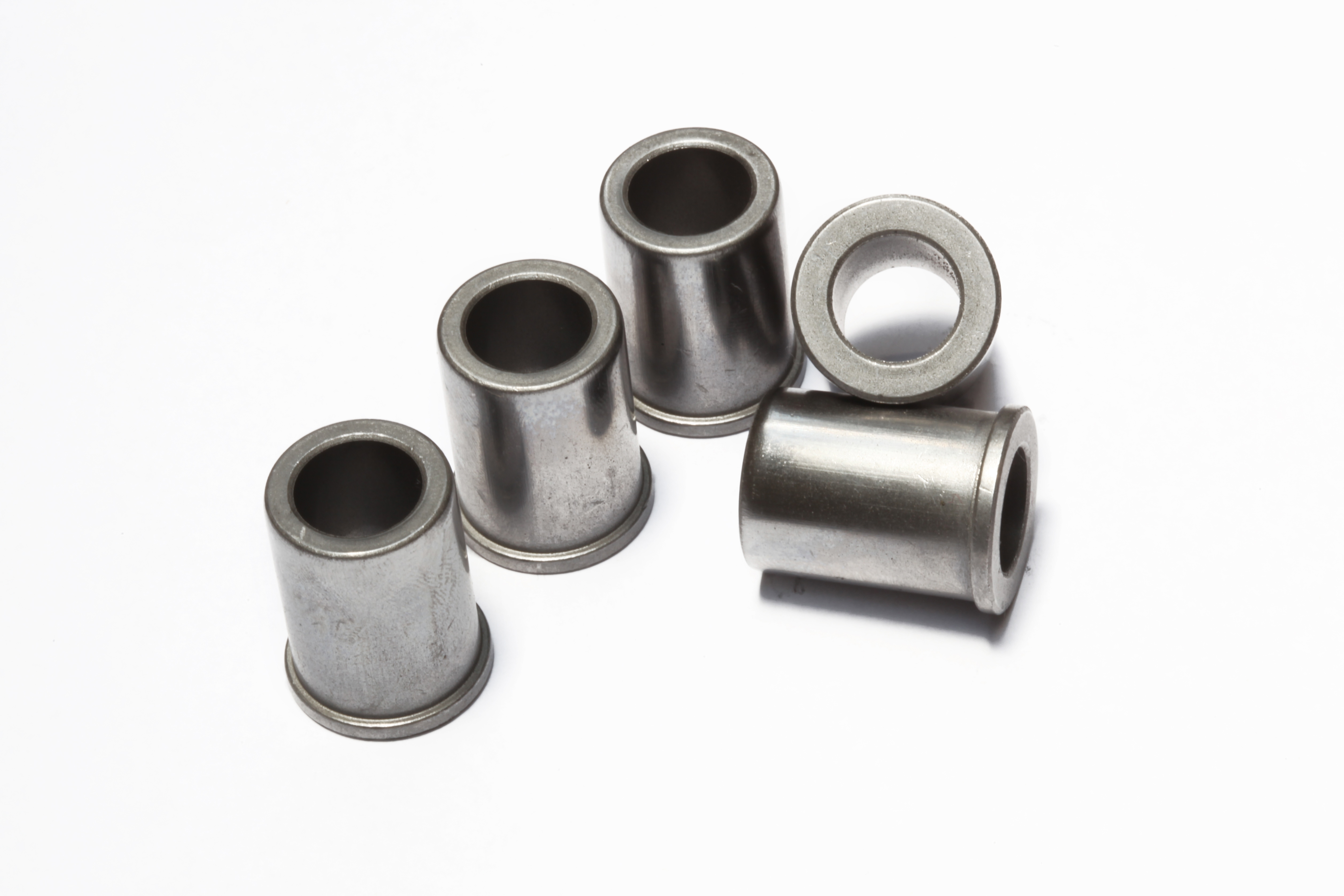
Powder metallurgy products,Oil-impregnated bearing bushing,Mechanical components